

Hong Kong Limited Partnership Funds: The Next Frontier in Private Equity Vehicles
By Ajay Shamdasani
For decades the global private equity landscape was defined by a predictable migration towards the Caribbean. Fund managers naturally sought efficiency and tax neutrality, and thereby looked to the Cayman Islands or British Virgin Islands. Yet, by the spring of 2026, the offshore supremacy universe had decisively changed with the advent of Hong Kong limited partnership funds, or LPFs. Since the territory’s Limited Partnership Fund Ordinance came into effect in Hong Kong on August 31, 2020, the city has successfully on-shored the private equity model locally by creating a sophisticated ecosystem combining the flexibility of traditional partnerships with the transparency and legal rigour of a top-tier financial hub.
This past March, Hong Kong’s Companies Registry revealed a staggering 1,488 active LPFs – a testament to the city’s successful pivot toward becoming the premier domicile for Asian private capital.

What makes LPFs particularly compelling is that managers can now bring management, operations, investors and underlying Asian assets together within a single credible financial centre, while still retaining much of the structural flexibility traditionally associated with offshore fund jurisdictions,
David Cameron – DCLO
The Legal Context
The architectural foundation of the shift is the – the Limited Partnership Fund Ordinance – legislation designed to replace the prevailing but obsolete century’s old partnership framework. Unlike rigid corporate structures of the past, LPF operate on the principle of freedom of contract. They allow general partners and limited partners to tailor their governing documents known as the ‘limited partnership agreement’ to the specific needs of their investment strategy, whether that involves complex capital call structures, bespoke ‘distribution waterfalls’ or unique governance rights.
Central to the legal appeal of the LPF is its statutory ‘safe harbour’ provision. Under traditional common law, limited partners risked losing their liability protection if they were deemed to participate in the fund’s daily management. Hong Kong’s LPF apparatus eliminates such ambiguity by providing an exhaustive list of activities that limited partners can perform without jeopardising their limited liability status. Permissible activities range from serving on an advisory committee to approving a specific divestment or providing collateral for the fund’s debt. This legal certainty has been a primary driver for institutional investors, particularly those from North America and Europe who require absolute clarity on their liability exposure before committing capital to Asia-centric vehicles.
“We are increasingly seeing clients who would historically have defaulted to Cayman, now actively prefer Hong Kong LPFs from the outset,” says David Cameron, managing partner of David Cameron Law Office (DCLO), a Hong Kong-based corporate and funds practice that regularly advises on LPFs, fund structuring, private capital transactions and cross-border investments across Asia. “The combination of legal certainty, tax efficiency and proximity to Asian investments has fundamentally changed the conversation,” Cameron says.
LPF governance is anchored by four mandatory pillars. At the helm is the general partner who bears unlimited liability for the fund’s obligations. The general partner is supported by an investment manager which must be a Hong Kong company or a registered non-Hong Kong entity and an independent auditor.
Most significantly, the city’s regulatory regime mandates appointment of a ‘Responsible Person’ to oversee anti-money laundering and counter terrorist financing compliance.
The requirement is important because that particular individual anchors their fund’s risk profile, says Simon Reid-Kay, principal of Simon Reid-Kay & Associates in Hong Kong. “Banks want to know who is accountable for onboarding, monitoring and escalation. A credible Responsible Person can accelerate account opening; a weak one can stop it altogether,” he warns.
The Responsible Person requirement, therefore, adds a layer of administrative oversight and has positioned Hong Kong LPFs as a cleaner, more transparent alternative to offshore vehicles which have faced increasing scrutiny from global regulators such as the Financial Action Task Force – the Paris-based global body which sets norms for AML, know-your-customer and financial crime compliance writ large.
Business Impact
The business implications of the territory’s LPF regime are most visible in the sheer velocity of its adoption. In 2025 alone, the registry recorded 389 new registrations, or year-on-year growth of over 35%. This momentum is fuelled by a fiscal environment that has been carefully calibrated to compete with traditional tax havens. Under the Unified Tax Exemption Regime, qualifying LPFs enjoy a total exemption from Hong Kong profits tax on transactions encompassing a vast array of assets from private equity, debt securities and increasingly, digital assets.
Tax efficiency is further enhanced by the Carried Interest Tax Concession, which as of 2026 imposes no tax on eligible carried interest distributed to fund managers. For the fund management community, this has transformed Hong Kong from a mere operational base to a tax-optimised domicile.
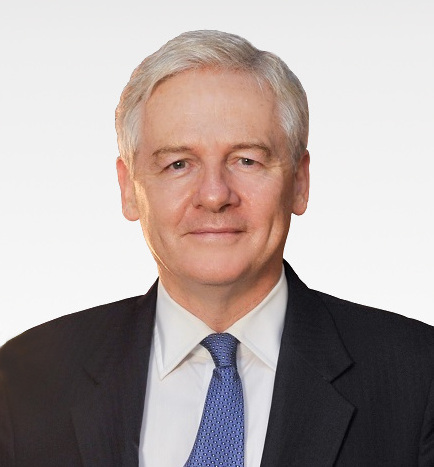
Managers are not rushing in blindly, but the removal of tax ambiguity is critical. Clients now see crypto-inclusive LPFs as viable structures—provided governance, custody and valuation are handled properly.
Simon Reid-Kay – Simon Reid-Kay & Associates
“What makes LPFs particularly compelling is that managers can now bring management, operations, investors and underlying Asian assets together within a single credible financial centre, while still retaining much of the structural flexibility traditionally associated with offshore fund jurisdictions,” Cameron says.
Simply put, the business logic is clear: aligning a fund’s legal domicile with its management team and its target assets – primarily in mainland China and the Greater Bay Area – allows managers to eliminate the substantive issues that have plagued offshore funds under the global minimum tax framework set out by the world’s most developed nations comprising the Organisation for Economic Co-operation and Development (OECD).
While proximity to China matters, it is not the entire story, says Reid-Kay. “What has really changed is substance. Hong Kong allows managers to align domicile, management and assets in one place, which is increasingly important in a post-BEPS [Base Erosion and Profit Shifting] world. Cayman still works, but Hong Kong works and satisfies regulators, banks and investors at the same time,” he says.
The business impact of LPFs is most pronounced in Hong Kong’s property sector. The structure has become the preferred warehousing vehicle for real estate private equity firms. For example, large scale developers and institutional investors use LPF structures to aggregate capital for significant acquisitions, holding properties through special purpose vehicles (SPVs) under the fund umbrella.
Such structures also offer a strategic advantage for stamp duty. While direct property transactions in Hong Kong can trigger prohibitive stamp duty costs, transferring interests within an LPF or of shares within an underlying SPV encounters significantly lower rates – often as low as 0.2%. Such flexibility allows real estate funds to exit investments or restructure portfolios with a degree of agility previously unattainable in the city’s active property market.
Additionally, Hong Kong’s 2026-27 Financial Budget introduced additional incentives for funds holding non-residential assets by providing a much-needed liquidity boost to the commercial office and industrial property sectors.
Regulatory Outlook
For the remainder of 2026, the regulatory landscape will be defined by deepening integration and enhanced reporting. The Hong Kong Monetary Authority, the territory’s de facto central bank and sectoral regulator, and the Securities and Futures Commission, the local capital markets watchdog, are currently moving toward Wealth Management Connect 3.0. The initiative is expected to allow LPF domiciled private funds to be marketed more broadly to qualified investors within the Greater Bay Area, tapping into a massive pool of mainland liquidity.
“The next phase of growth will likely come from deeper integration with mainland capital flows and private wealth channels,” DCLO’s Cameron says. “That could further cement Hong Kong’s position as the leading domicile for Asia-focused private funds.”
Such a ‘through-train’ for private capital is likely to trigger a secondary wave of registrations as managers seek to capture mainland Chinese wealth looking for diversified regional exposure.
The regulatory landscape, however, is also becoming more demanding. For example, implementation of the local Crypto Asset Reporting Framework earlier this year has introduced new reporting obligations for LPFs that include tokenised real estate or digital securities in their portfolios.
Indeed, for virtual assets, client reaction to the city’s 2026 crypto-inclusive LPF guidelines has been one of cautious optimism, Reid-Kay says: “Managers are not rushing in blindly, but the removal of tax ambiguity is critical. Clients now see crypto-inclusive LPFs as viable structures—provided governance, custody and valuation are handled properly.”
Further, as the trends towards re-domiciliation accelerates with over 30 funds successfully migrating from the Caymans to Hong Kong by the end of 2025, the Companies Registry is expected to tighten its scrutiny on the economic substance of such migrating entities. Regulators are keen to ensure that Hong Kong does not become a rubber stamp jurisdiction but rather a hub where management and control are demonstrably local.
The challenge for the next two years will be balancing rigorous compliance with the need to remain competitive. The cost of maintaining a Responsible Person and conducting annual audits has risen, creating a higher barrier to entry for boutique fund managers.
Still, for the majority of mid-to large-cap players, compliance costs are a necessary premium for the prestige and market access that a Hong Kong domicile provides.
“For credible managers, the substance requirements are not a deterrent – they are the price of entry. Two experienced staff and HK$2 million (US$254,000) in spend is modest compared to the benefit of a zero percent carried interest regime and long-term tax certainty,” Reid-Kay says.
The city has successfully leveraged its common law heritage and proximity to the second largest economy on earth to create a product that is both globally compliant and commercially attractive.
Conclusion
Hong Kong LPFs have successfully redefined the city’s role in the global financial hierarchy. By providing a legal framework mirroring the flexibility of offshore jurisdictions while offering the protections of an onshore financial centre, the Special Administrative Region has effectively challenged the long-standing dominance of Caribbean tax havens.
The empirical data speaks volumes: with nearly 1500 funds registered and a robust growth rate, LPF are no longer an experiment but are now a cornerstone of the city’s asset management sector.
For investors in Hong Kong property and beyond, LPFs provides a sophisticated, tax efficient and transparent vehicle – one uniquely positioned to capture the next cycle of Asian growth. As the global regulatory environment trends toward greater transparency, Hong Kong’s LPF regime stands as a model for how a modern financial hub can adapt and thrive in a post-offshore world.
